

What is Pain? And the Types of Pain
August 9, 2017
The Impact of Dehydration on Wound Healing
August 16, 2017
Lymphedema is a condition whereby an area of the body becomes chronically swollen. Usually, it is an arm or a leg that increases in size, but lymphedema can also occur in the trunk, neck or face. Many doctors are not fully aware of lymphedema, the causes, and the side-effects so most diagnosed cases are diagnosed six months after the onset of the chronic swelling. There are about 300 000 people in Canada who suffer from lymphedema according to recent statistics, but researchers believe that there are much more people who suffer from this conditions due to the fact that it is severely under-diagnosed.
There are three stages of lymphedema:
Stage 1: At this stage, there will be chronic swelling that is gel-like, referred to as pitting edema. If you press down on the area with swelling, there will be an indent that will remain for several seconds to several minutes before returning to “normal.” This is the easiest stage to treat, especially before the area has drastically increased in size.
Stage 2: During this stage, some of the swellings begins to harden which is called fibrosis. The hardened areas will impede the flow if the lymph even more, possibly further increasing the amount of lymphedema in the area.
Stage 3: At this stage, the condition is very advanced and the skin starts to change, becoming dry, cracked, red and splotchy.
100% of people who have had cancer in the neck or head get lymphedema. It is reported that 6%-70% of people with ovarian, breast, skin, testicular, prostate, bladder, colon and cervical cancer suffer from lymphedema. This skewed range is probably due to the under-diagnosing with patients who are followed by doctors and clinics who aren’t knowledgeable on lymphedema.

What are the risks of lymphedema?
- Decrease in limb function due to the size of the limb
- Disfigurement of the limb
- Difficulty purchasing clothes due to the size of the area with lymphedema
- Psychological side-effects due to disfigurement
- Immune suppression due to the lack of proper lymphatic flow
- A significant increase in weight
- An increase in chances of cellulitis (7% normal population, 70% in people with lymphedema)
- Cancer metastasis in advanced, severe cases. This type of cancer happens because fat cells start to deposit in the area with lymphedema, so the area becomes hypervascularized causing the formation of fast growing and progressing cancer. This type of cancer is untreatable and is fast-acting.
Lymphedema has many side-effects and risks that range in severity such as:
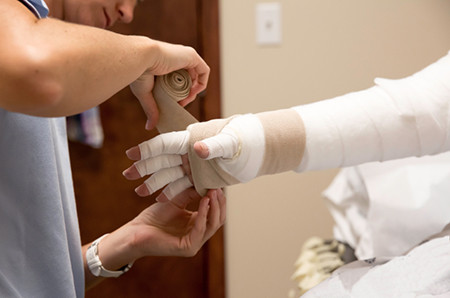
How is lymphedema treated?
Lymphedema can be treated, controlled, but not cured. While doctors and researchers have tried medications and surgical procedures, none have been successful. The only successful treatment is the combination of lymphatic drainage massage, compression therapy, and exercise.
Lymphatic drainage massage is performed with repetitive movements towards areas with healthy lymphatic vessels and lymph nodes in order to create new lymphatic pathways. Right after the treatment, the therapist will wrap the area with compressive bandages in order to prevent an increase in the size of the area between treatments. Once fluid levels have substantially decreased (a plateau in the change of arm circumference) the person will have to be measured and fitted for a custom compressive garment. The garment will prevent a relapse in lymphedema levels and must be changed every six months.
Exercise, especially exercises in a pool are very important to the management of lymphedema. The pressure that the water puts on the body is even and will help to prevent and treat the lymphedema.
It is very important to treat the lymphedema as soon as it is detected to avoid a large increase in fluid amounts, too much stretching of the skin and preventing the negative side effects of lymphedema.
Lymphedema prevention
Because the supply of lymphocytes (which fight infection) is reduced, the affected limb is more vulnerable to skin infections. If the patient takes measures to minimize the risk of cuts and grazes to the skin, their risk of subsequent infections may be significantly reduced.
The following measures may help:
- Avoiding hot showers, steam rooms, and saunas may help prevent symptoms of lymphedema.
- After cancer treatment, avoid heavy activity with the affected limb; rest it while recovering.
- Avoid sun beds, steam rooms, and saunas.
- Do not take very hot baths or showers.
- Do not wear tight fitting clothes.
- Do not wear tight fitting jewelry.
- Don't go barefoot outdoors.
- Look for changes or breaks in the skin.
- Keep your skin supple by moisturizing it every day.
- Make sure footwear fits properly.
- To prevent developing athlete's foot, use an anti-fungal foot powder.
- When gardening, use gloves.
- Keep nails short.
- When going outside in an area where there may be insects, use insect repellent.
- When out in the sun, use a high factor sun block.
- When you have a cut, treat it immediately with an antiseptic cream. And keep the area clean.
- Raise the affected limb above the level of the heart whenever possible.


